Before the Printed Programme: How Concerts Shared Their Music
Before the printed programme, audiences relied on familiar music and local customs. See how those clues can make your next concert more vivid.
A common mistake is to imagine that concertgoers everywhere, before printed programme notes, entered a hall without any context. That assumption can make the past seem simpler than it was: musical customs varied by place, period, and kind of event. In some settings, listeners could draw on familiar tunes, spoken introductions, or conventions they already knew. The loss was not merely a page of explanation; it was the chance to use one particular kind of guide.
That distinction offers a fresh way to approach a concert now. Rather than treating notes as the only route into a piece, you can consider what the event itself communicates: the performers’ choices, the music’s familiar patterns, and the customs of the room. The point is not to reconstruct a past audience. It is to notice how listening can be shaped by context as well as by written explanation.
What could guide listeners besides printed notes?
There is no single answer for every concert or historical setting. A listener who recognized a melody from home or a public gathering might hear it differently when it appeared in a new instrumental arrangement. In other circumstances, spoken remarks from a performer or organizer could provide context. These possibilities depended on the event; they should not be mistaken for universal practice.
Convention could offer another kind of orientation. The order of pieces, the way performers entered, and the audience’s response might help listeners understand what sort of occasion they had joined. But a visible custom was not a complete explanation of the music, and listeners did not all bring the same knowledge or expectations.
Think of a concert’s cues like objects on a kitchen table: they can suggest how a gathering works, but they do not tell every person what to think. A familiar musical gesture might prompt recognition for one listener and curiosity for another. Context opens a door; it does not dictate what you will hear inside.
How can you prepare without trying to master the work?
Start with the event listing and the venue’s own practical information. Check the work titles, performers, and any notes about the setting. A church, community hall, or concert room may shape the event’s atmosphere, but its name alone cannot tell you exactly how the music will sound.
If you want a point of contact with the music, choose one accessible source: a recording, a score excerpt provided by the ensemble, or an introduction from a performer. Listen for a recurring rhythm, a returning melody, or a distinctive change in texture. One thread is enough; you need not arrive ready to identify every section.
Keep any expectations provisional. A short recording can familiarize you with a tune, but a live performance may bring out a different balance or pace. Treat what you heard beforehand as a point of comparison, not a script for how the concert ought to unfold.
What can you learn from the room and the audience?
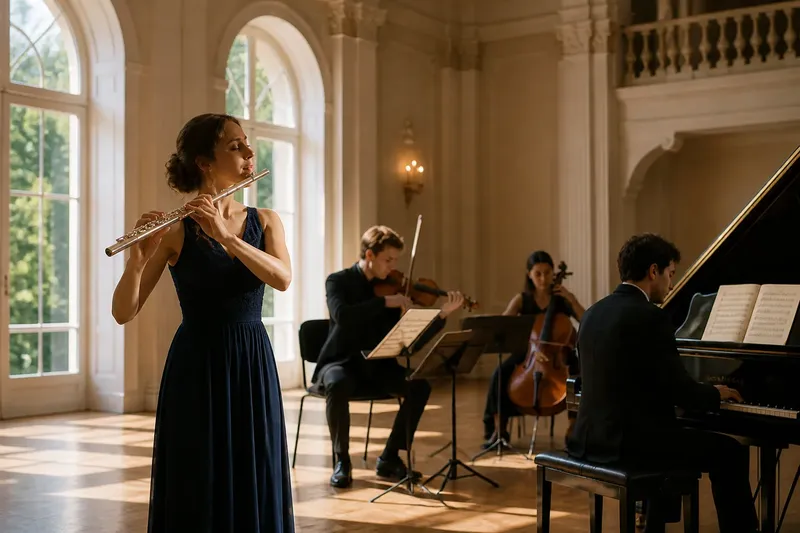
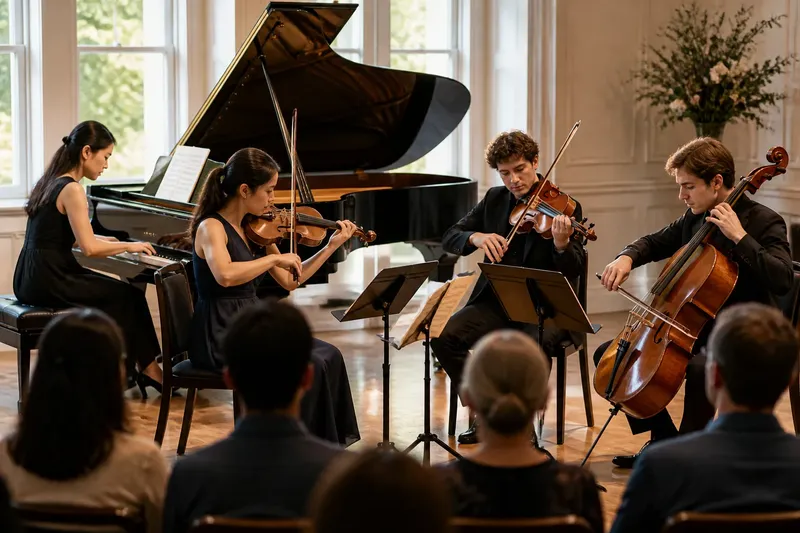
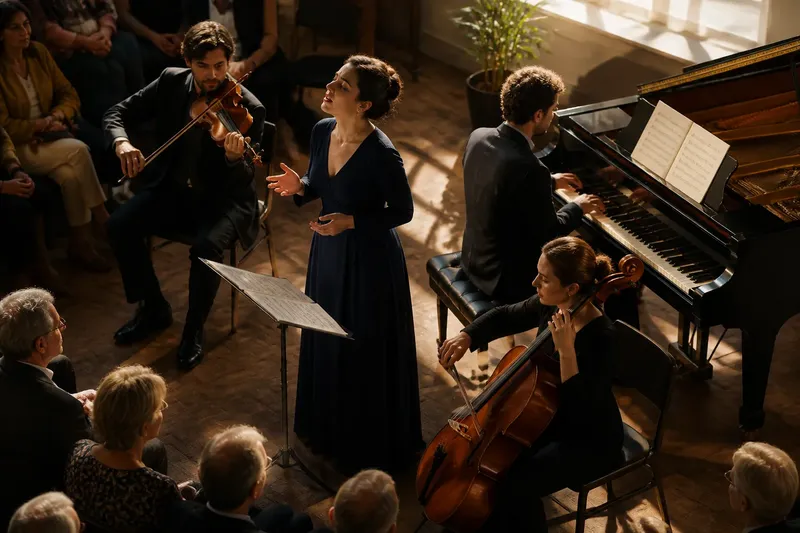
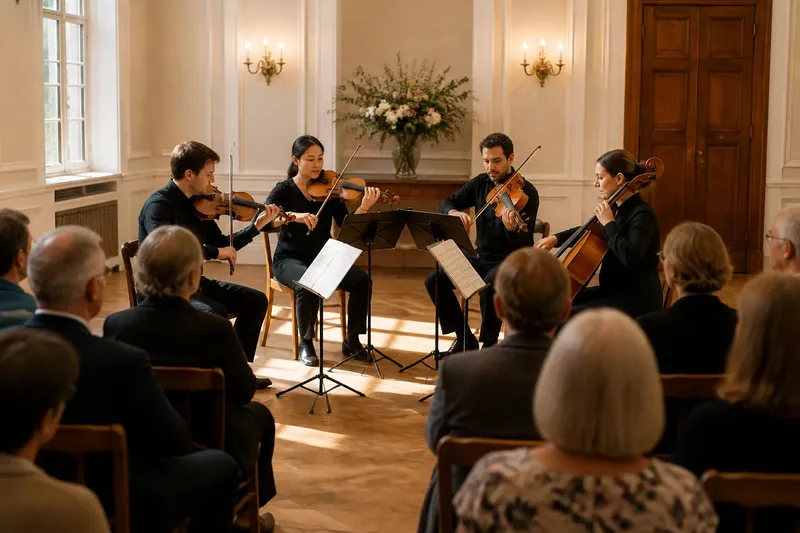
Before the music starts, notice how performers are arranged and whether they can see one another. A chamber group facing inward makes some exchanges visible; musicians oriented toward a conductor present a different kind of coordination. Neither arrangement has one fixed meaning, but both can affect what draws your attention.
The audience’s behavior can offer clues about local custom, too. Applause, silence, and transitions between pieces vary by event. If you are uncertain when to respond, follow the room discreetly rather than worrying over each cue. The performers remain the focus.
Room acoustics add another layer. In a space with lingering echoes, quick passages may seem less sharply separated; in a close, dry room, small changes of touch may stand out. You do not need specialist terms. Notice whether the sound hangs in the space, travels across it, or feels close to the performers.
What questions help you listen without notes?
What should I listen for first?
Choose one audible feature, such as a recurring rhythm or a melody that returns. When it changes or disappears, let your attention move elsewhere instead of trying to hold onto it.
Should I follow the printed programme if one is available?
Yes, if it helps, but it need not dictate your attention. Read a note before the performance or during a pause, then return to listening for what catches your ear.
What if I cannot identify the instruments?
Describe their roles instead: one sound may carry the melody while another supports it, or two parts may seem to answer each other. That kind of description is useful even without naming the instruments.
How can I tell whether the room is shaping the sound?
Listen for whether notes linger, blend, or seem sharply distinct. Compare a quiet passage with a busier one; the contrast can make the room’s effect easier to notice.
How might these cues work together in one concert?
Imagine you have a ticket for a chamber concert in a neighborhood hall and know none of the works. Before leaving, you read the event listing and learn that the program includes a string quartet; you choose a short recording of the first work and listen for a repeated opening rhythm. At the hall, you notice the players face one another and the sound seems to linger after a sustained note. During the performance, you recognize the rhythm, then listen for how the players’ parts overlap as it returns. The result is a specific listening thread—rhythm, exchange, and resonance—without needing to identify the work’s form or follow every note. The tradeoff is that you may miss other details while attending to that thread, so let it go when something else becomes more compelling.
Which small choices make concert preparation useful?
Use this short list to decide what deserves your attention. Each observation points to an action, with an alternative if the cue does not help.
- Check the event listing for work titles; if it names a piece you want to hear beforehand, choose a short recording, but if it does not, arrive without a preview rather than guessing.
- Check the venue description for the type of space; if it names a church or hall, listen for lingering sound, but if the description gives no acoustic clue, simply notice whether notes blend or stop cleanly.
- Check whether the ensemble provides a score excerpt or introduction; if one is available, choose a single feature to recognize, but if not, use a melody or rhythm you hear during the performance.
- Observe how performers are arranged before the first note; if they face one another, watch for visible exchanges, but if their attention centers elsewhere, follow the sound rather than searching for gestures.
- Notice how the audience responds between pieces; if a clear local pattern emerges, follow it discreetly, but if responses differ, wait for the performers’ cue.
- After the concert, write one plain-language detail you remember; if it prompts a question, look up that feature, but if it does not, keep the note as a record of what held your attention.
The last note need not be technical. You might write that a melody seemed to circle back, that a sustained sound lingered, or that one instrument changed the group’s character. A concrete memory gives you a useful starting point if you later decide to read about the work or hear it again.
Why does shared listening still matter?
A concert is heard by individuals, but it also unfolds among people. A familiar gesture may connect with one listener’s memory, while a quiet room helps another focus on a detail. Those responses can coexist without forming a single, agreed interpretation.
For a search about listening before the printed programme, the practical lesson is modest: context can come from more than explanatory text. A note may name a form or offer background, while the room, performers, and your own recognition give you other ways to orient yourself. Keep one thread in mind, but let the performance change it. That balance leaves room for both preparation and surprise.