How to Hear a Winter Afternoon Concert as a Musical Conversation
A winter afternoon concert can feel more coherent when you listen for how performers answer, interrupt, and reshape one another across the program.
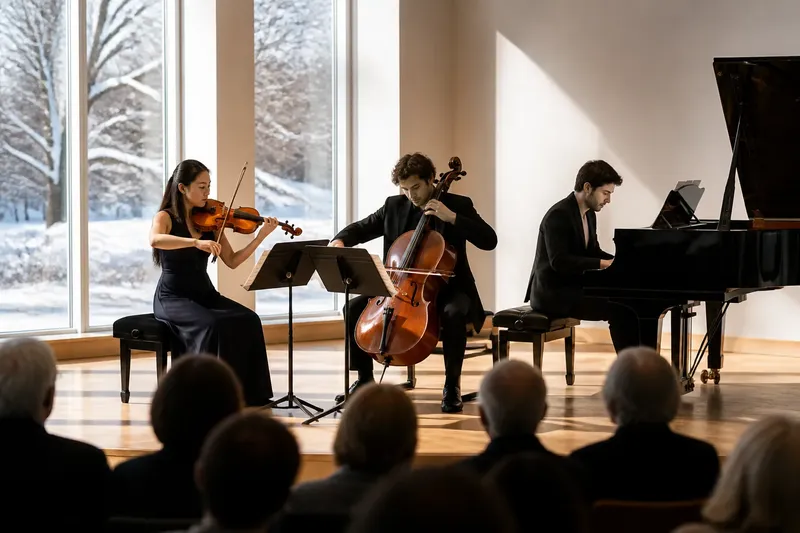
The common mistake at a winter afternoon concert is treating each piece as a sealed container: listen, applaud, then start over. That can leave the program feeling like a stack of separate events, even when the performers are making connections across it. Try hearing the concert as a conversation, with musical ideas passed along, resisted, or transformed from one work to the next.
Imagine you arrive at a neighborhood arts hall on a cold, bright afternoon. The printed program lists three works: a spare opening piece, a lively selection, and a reflective finale. You do not need to know their histories. Listen instead for what the performers seem to carry forward: a pulse, a kind of gesture, a change in energy, or a striking contrast.
What can the opening establish?
The first piece gives you a starting point, not a rulebook. Notice its musical character in ordinary language: does it feel spacious or crowded, measured or restless, direct or hesitant? Those impressions give you something to compare with later without requiring specialist terms.
Pay attention to how the performers shape beginnings and endings. A phrase may gather momentum, arrive firmly, or trail away. A pause can feel like a full stop or an invitation to listen for what comes next. These choices help establish the concert’s opening voice.
Think of the program like a conversation around a table: one speaker’s remark can change how you hear the next person, even if the subjects differ. The comparison is not a claim that the pieces tell a single story. It is a way to notice how order and performance shape your experience.
How do performers make one piece answer another?
Between works, listen for resemblance as well as contrast. A later piece might echo the opening’s steady pulse, replace its restraint with a more forceful attack, or make a familiar kind of phrase sound newly unsettled. The link may be subtle, and it need not have been planned as a narrative for you to hear it.
In the imagined concert, the opening feels spacious, while the middle selection is lively and tightly packed. You notice that both begin with a clear rhythmic pattern, though the second makes that pattern feel more insistent. The result is not a hidden code to solve; the shared pulse simply gives your ear a bridge between two different moods.
Performers also create connections through pacing. The silence before a new piece, the length of applause, and the way musicians prepare can affect whether the next work feels like a fresh start or a response. You can notice that transition without assuming what the performers intended.
What should you listen for across the program?
Choose one thread that is easy for you to hear, then check how it changes from piece to piece. Useful threads include:
- Pulse: Does the music feel steady, buoyant, or unsettled?
- Texture: Does the sound feel spare, layered, or crowded?
- Energy: Does the performance build, hold back, or suddenly shift?
- Phrasing: Do musical lines seem to flow, pause, or break into short gestures?
- Silence: Do pauses feel like closures or openings?
- Contrast: Does a later work seem to oppose or soften something heard earlier?
These are listening prompts, not boxes to tick. If one thread stops being interesting, let it go. The point is to notice how the program changes your expectations, not to keep a running inventory of every sound.
What questions help you hear the program as a whole?
Do I need to know the composers or pieces in advance?
No. Program notes can add context, but you can compare musical qualities you hear directly, such as pacing, texture, and energy. If you recognize a work, let that familiarity inform your listening without making it a test of memory.
What if the pieces seem unrelated?
They may be intentionally varied, or the connection may not be apparent to you. Listen for a change in your own expectations: a contrast can shape the program even when no musical idea clearly carries across.
Should I take notes during the performance?
Only if writing does not distract you or other audience members. A few words between pieces can preserve a connection you noticed; otherwise, wait until afterward and write down the pair of sounds or moods that stayed together in your memory.
What if I lose the thread?
Let it go and listen to the next clear beginning, shift, or pause. A concert does not depend on uninterrupted concentration, and one newly noticed connection can still change how the program feels.
How can you tell what the ending changed?
Listen to the final piece without demanding that it tie everything together. It might echo the opening, push against the middle selection, or seem to occupy a world of its own. Ask what the ending changes in your sense of the concert: does an earlier moment now seem gentler, more forceful, or newly important?
Imagine the reflective finale in the arts hall returns to the opening’s spacious feeling, but with a more unsettled close. You recall the opening as calm at first; after the ending, its quiet seems less settled. The observable result is a changed impression of the first piece, not proof that the program contains a single intended message.
After the applause, try naming one relationship rather than reviewing the whole event. “The ending made the opening feel less certain” is enough. That small observation can help you remember not just what you heard, but how the order of the works shaped your response.
For your next winter afternoon concert, listen for a musical idea that changes hands: a pulse that returns with new force, a pause that alters the mood, or a finale that recasts an earlier sound. The program may not resolve into a neat story, and it does not need to. A useful connection can be as modest as hearing the last piece make you reconsider the first.